



Fertilizer for hemp
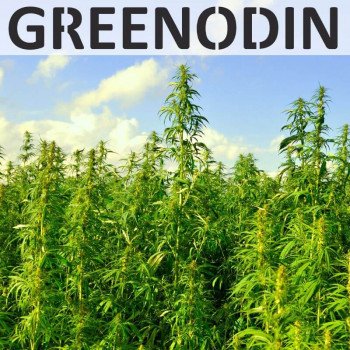
Europe and the USA have legislatively regulated the cultivation of industrial hemp, classifying it as a regular agricultural crop and distinguishing cannabis as a crop strictly for medical purposes. On December 2, 2020, the United Nations Commission on Narcotic Drugs removed cannabis from the category of dangerous drugs listed in Schedule IV of the Single Convention on Narcotic Drugs.
The cultivation of industrial hemp is presented on the official resource "Diya": https://business.diia.gov.ua/en/idea/silske-gospodarstvo/kultivuvanna-tehnicnih-konopel
Fertilizer for hemp under the trade name GREENODIN ensures the production of high-quality yields of industrial hemp. GREENODIN offers organic fertilizers specifically designed for agricultural crops, including hemp. These fertilizers contain the necessary nutrients and micronutrients that promote healthy plant growth and development, as well as enhance the quality of the hemp harvest. By using GREENODIN fertilizers, you can be confident in obtaining high-yielding and healthy industrial hemp.
Cultivation of Industrial Hemp
Industrial hemp, with its fibrous plant structure, contains over two hundred active substances, 18 of which have been studied extensively. It is primarily valued for its textile and oil production, with limitations on the presence of psychoactive compounds such as tetrahydrocannabinol (THC), cannabidiol (CBD), and cannabinigerol (CBG). Hemp is successfully used in various cuisines worldwide, including pastries, candies, medicinal products, and cosmetics. It also has applications in construction, lubricants, and even road building. Hemp fiber is highly durable and serves as both a cordage material and a valuable resource for paper production. Its versatile and waste-free nature makes it highly attractive for agricultural purposes. The properties of hemp are further enhanced by the use of silicon-based organic fertilizers like GREENODIN.
Selection of Hemp Varieties and Hybrids
In Ukraine, there are approximately 18 registered varieties of industrial hemp, compared to 74 varieties in Europe. The most common varieties include Nikolaychik, Sofia, Glesia, Glukhovskaya-51, Glyana, Sura, Lara, Globa, and others.
When choosing a specific variety for cultivation, you can check its registration on the resource: https://regulation.gov.ua/book/165-zelena-kniga-rinok-tehnicnih-konopel
For direct recommendations on purchasing hemp seeds, you can consult our specialists or directly contact the experts at the Institute of Bast Crops of the National Academy of Agrarian Sciences of Ukraine: http://ibc-naas.com/en/homepage/.
Predecessor Crops. The best predecessor crops for hemp are winter cereals, potatoes, sugar beets, corn, and vegetable crops. These crops benefit from the application of high doses of organic fertilizers such as compost or manure, or small doses of professional organic fertilizers like GREENODIN. Grains and perennial leguminous grasses also make good predecessor crops for hemp. It is not recommended to sow hemp after sunflowers because the fields become heavily infested with broomrape, which hinders harvest and reduces the quality of the yield, especially in natural and organic farming.
Hemp yields well when included in crop rotations. It prefers lowland soils and drained peatlands in the soil cover. Other soil conditions can be adjusted by using GREENODIN, which compensates for the required alkalinity or acidity based on its own pH characteristics, which vary among fertilizer types.
Soil Tillage System
The primary soil tillage depends on the predecessor crops and involves a two-step plowing after stubble crops (winter cereals, grain legumes). The first plowing is done to a depth of 6 cm, and the second plowing is done to a depth of 10 cm. In cases of heavy weed infestation, conventional agronomy suggests the use of herbicides, which is not possible in organic farming. Therefore, two weeks after plowing, additional plowing is carried out. If hemp is cultivated after late crops such as potatoes or sugar beets, plowing is done immediately after harvesting the predecessor. The plowing depth is 22-25 cm. Unfortunately, even with shallow plowing, the beneficial agronomic microorganisms suffer. To compensate for the loss of beneficial microorganisms, the effective mechanism is the application of organic fertilizers like GREENODIN, which contains bacteria that develop in the rhizosphere of the plant and produce carbonic acids, amino acids, polypeptides, polysaccharides, enzymes, phytohormones, and natural antibiotics. They create favorable conditions for plant nutrition and growth.
In spring, during the physical ripeness phase of the soil, leveling and loosening of the soil are carried out. Cultivation with simultaneous leveling and rolling of the soil ensures a better harvest compared to pre-sowing cultivation alone.
On floodplain soils and drained peatlands, plowing can be replaced with spring disking to a depth of 10 cm, followed by harrowing and rolling. The application of GREENODIN at this stage, at a basic rate of 250 kg/ha or 25 g per square meter, is effective in increasing the yield and improving the quality characteristics of hemp.
Fertilizer use
Hemp positively responds to optimizing the soil's nutrient regime through the use of fertilizers. The application of organic fertilizers depends on the soil and climatic conditions of the region. In arid regions, it is not effective to apply more than 40 tons/ha of manure. In other regions, the average manure application rate is 20-40 tons/ha, while on lowland and chernozem soils, it is 10-20 tons/ha, and on peat-bog soils after the first year of cultivation, it is 3-5 tons/ha. Such high application rates entail corresponding fuel costs and the use of specialized machinery.
Organic granulated fertilizers like GREENODIN significantly increase the yield and quality of hemp. The effectiveness of applying silicon-containing complex organic fertilizers GREENODIN to field crops, including hemp, at a rate of 250 kg/ha, as well as in the form of granules and microgranules, lies in their ability to improve plant adaptation to stress, enhance fiber quality, increase plant resistance to pathogens, and improve the efficient use of soil moisture reserves. With their organic base, leonardite enriched with polysilicic acids and beneficial microorganisms, these fertilizers also have a positive impact on soil fertility, renewing and enhancing it. The natural mineral component of GREENODIN, diatomite, composed of mobile silicon, serves as a building material for soil bacteria and plants, as well as a sorbent for the soil itself, removing residues of unused synthetic fertilizers, including heavy metals.
In classical agronomy, using mineral fertilizers, the recommended application rate for grey and dark grey podzolic soils is N60P90K90-120, while for fertile soils (chernozems), it is N30P45-60K45-60. Phosphorus and potassium fertilizers are recommended to be applied in autumn before plowing, while nitrogen fertilizers are applied in spring before sowing. Nitrogen supplementation can be achieved by applying N30-45 per hectare or by adding 5-6 tons/ha of manure or 7-10 tons/ha of poultry manure. An effective solution to enhance the action of mineral fertilizers, or partially or fully replace them, is the use of organic fertilizers like GREENODIN, which are balanced in terms of macro and micronutrient content and contain bacteria that produce these essential elements.
Seed Preparation and Sowing Hemp
Seed preparation and sowing hemp is sown using seeds of large fractions with a purity of not less than 96% and germination rate of at least 75%. There is a correlation between higher germination rates and better yields and fiber quality. Pre-sowing application of GREENODIN ensures the highest germination rate due to the action of beneficial microorganisms that begin to develop when introduced into the soil under specific moisture conditions, even during dew.
The sowing methods for hemp depend on the intended use (for seed production, greenery, or dual-purpose). The conventional row sowing method, with a row spacing of 15 cm, is used for cultivating hemp for greenery and dual-purpose. Seed sowing is carried out using wide-row (45 cm) or strip sowing methods for seed production. The recommended seed sowing rate is 80-90 kg/ha for monoecious hemp and 100-115 kg/ha for dioecious hemp.
Hemp is sown simultaneously or immediately after the sowing of early spring crops, when the soil at the seed depth reaches a temperature of +8-10°C. On heavy soils with sufficient moisture, the seed depth is 2-3 cm, while on light-textured soils, it is 3-5 cm. The mobile silicon in GREENODIN, utilized by bacteria present in the formulation, helps create a so-called silicon matrix that provides additional protection against stress factors and promotes active development.
Crop care for hemp includes combating surface crusting through harrowing, which is performed on the fourth day after sowing. Mechanized inter-row cultivation is carried out on wide-row plantings to control weeds. The first cultivation is performed to a depth of 5-6 cm, the second to 7-8 cm, and the third to 5 cm. Deep cultivation (12-14 cm) can lead to soil drying and damage to the hemp's root system. The use of GREENODIN significantly contributes to soil cultivation due to the presence of mobile silicon (diatomite) in the formulation, which has a bulk density of 350-400 grams per liter. The crop management system includes the use of herbicides for weed control and insecticides for combating hemp flea beetles and stem borers. It is worth noting that diatomite acts as a natural insecticide in this context.
Hemp harvesting
When harvesting hemp for fiber, the collection process begins when the plants have reached 46-60% seed maturity. For versatile use, the first harvest is for the stalk, followed by the seed harvest after 35-40 days. The most effective method of harvesting is direct combine harvesting, preceded by desiccation of the crops 5-6 days before hemp harvest. The application of GREENODIN organic fertilizers actually enhances the strength and quality of hemp fibers.