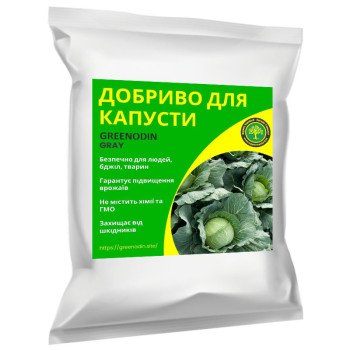
Fertilizers for cabbage
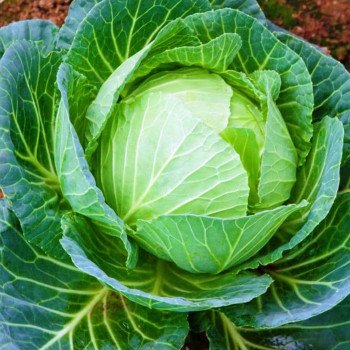
Cabbage, also known as white cabbage or headed cabbage, is a typical representative of the cruciferous family, used in various dishes. To achieve a high-quality harvest of this crop, it is necessary to select fertilizers for cabbage correctly and implement comprehensive solutions, with the leading product being the GREENODIN brand.
For 1 ton of cabbage harvest (heads) and the corresponding amount of by-product, 4.1 kg of nitrogen (N), 1.4 kg of phosphorus (P2O5), 4.9 kg of potassium (K2O), and micronutrients are used. These nutrients are provided by GREENODIN's bio-organic fertilizers, which meet the nutritional requirements of cabbage in terms of macro- and micronutrients. Additionally, these fertilizers contain nitrogen-fixing, potassium-, and phosphorus-producing bacteria.
Cabbage positively responds to fertilizer application, especially organic ones. The use of GREENODIN fertilizers significantly expands the scope of cabbage production, including its use in food, processing, and even traditional medicine. It allows for obtaining organic produce due to the inclusion of humus components, which are essential factors for soil fertility.
Cabbage Cultivation
Effective cabbage cultivation relies on the use of proper techniques based on optimal soil preparation, fertilization systems, and crop care. Crop rotation also plays an important role.
Choosing a Location for Cabbage
The location for cabbage cultivation should provide optimal conditions for the growth and development of the plant. Cabbage thrives in loose, moisture-retaining, and fertile soil under direct sunlight. It is preferable to grow cabbage near water bodies.
Crop Rotation for Cabbage
To achieve high productivity and quality harvests of cabbage, it is important to follow a crop rotation plan. Ideal preceding crops for cabbage include legumes, carrots, cucumbers, onions, potatoes, beets, celery, parsley, sorrel, garlic, and dill. It is not advisable to plant cabbage after other cabbage or other cruciferous crops.
Planting Cabbage in Open Ground
Cabbage can be grown from seed or seedlings. Seedlings for planting in open ground should be sown when the soil temperature reaches +8°C at a depth of 6-9 cm. Morphologically, the seedlings should have 5-7 fully formed leaves and a plant height of 12-20 cm.
The planting scheme for cabbage, specifically white cabbage, is one of the key factors in achieving high yields. The most common spacing is 40-50 cm between rows and 30-40 cm between plants (50x70 cm for mid-season varieties, 60x90 cm for late-season varieties). Avoid planting cabbage too close together to prevent light deficiency.
Cabbage Seedling Sowing
Cabbage is usually sown for seedlings about a month before transplanting them into open ground. It is important to provide the necessary nutrients during the initial growth and development of the plants. One of the best options is to use GREENODIN garden soil as an artificial substrate. If using your own substrate, enrich it with GREENODIN fertilizers while adjusting the substrate's pH according to the cabbage's requirements.
Soils for Cabbage
Cabbage has specific soil requirements, and it thrives best in fertile soils with a neutral soil solution reaction, ideally with a pH of 6.7-7.3. Acidic and alkaline soils can hinder the availability of nutrients for cabbage plants. To compensate for the negative effects of acidity, appropriate GREENODIN fertilizers can be applied.
The application of GREENODIN fertilizers is determined by the soil acidity:
- For neutral and acidic soils with a pH <6.0, GREENODIN GRAY organic fertilizer is applied at a rate of 25 g/sq. m (250 kg/ha).
- For alkaline soils with a pH >7.5, GREENODIN BROWN is applied at a rate of 25 g/sq. m (250 kg/ha).
The accumulative nature of GREENODIN fertilizers allows for a reduction in the maximum application rate from 25 g/sq. m (250 kg/ha) to 8 g/sq. m (80 kg/ha) by the 6th season of application, with a 20% reduction each season, without any loss in effectiveness. This leads to significant economic benefits.
Soil treatment for cabbage
Soil preparation for cabbage cultivation involves several important steps. First of all, the choice of soil cultivation system depends on the preceding crop and the level of weed infestation. It is crucial to apply the appropriate fertilizer from GREENODIN, which significantly enhances soil cultivation effectiveness and promotes healthy cabbage growth. The best results for cabbage cultivation are achieved using the traditional soil cultivation system, which includes plowing the soil to a depth of 20-22 cm.
Caring for cabbage seedlings
Care for cabbage seedlings is essential during their cultivation. It involves pre-moistening the substrate before sowing and even covering the soil with a plastic film. The temperature should be maintained at around +20°C. After the seedlings emerge, the plastic film is removed, and the temperature is reduced to +15-17°C during the day and +8-10°C during the night. Cabbage requires an adequate amount of light, with an optimal daylight duration of 12-15 hours. Therefore, additional lighting devices should be used for seedling cultivation, especially during the winter season.
Sowing cabbage in open ground
When sowing cabbage in open ground, the seeds are planted at a depth of up to 1 cm. During the initial growth period, cabbage is highly sensitive to the availability of readily soluble phosphorus. Therefore, GREENODIN fertilizer, which contains phosphorus-producing bacteria, is applied in the rows during sowing to fulfill this function effectively.
Proper care for cabbage
Proper care for cabbage is essential not only for the plant's health and a good harvest but also for the enjoyment of fresh and tasty vegetables grown with your own hands. When using «GREENODIN garden soil» substrate combined with GREENODIN fertilizers for indoor seedling cultivation, the convenience lies in giving the soil one-time attention during planting and regular watering. The rest of the process transforms into a self-sustaining regimen as microorganisms in the soil develop simultaneously, creating a cohesive ecosystem (biocoenosis). As a result, there is no need for further fertilization, and the risk of missing watering is reduced.
Watering cabbage
Cabbage is considered a moisture-demanding crop. Young plants should be watered every 2 days after transplanting into the soil for a period of 2 weeks. The next watering should be done during the head formation stage, and watering should be stopped around 20 days before harvest. By using the comprehensive GREENODIN fertilizer, the watering requirement can be reduced by up to 30% when using GREENODIN GRAY and up to 20% when using GREENODIN BROWN. The moisture-retaining function of these products not only helps in water conservation but also improves the structure of water, making it more efficient for cabbage consumption.
Feeding cabbage
To achieve maximum cabbage yield, it is essential to provide fertilization. The first fertilization should be done during the transplanting of seedlings into the open ground, and the optimal conditions are provided by using organo-mineral fertilizers like GREENODIN, which contain nitrogen, phosphorus, and potassium. The second fertilization can be carried out two weeks after the first one, and the third fertilization can be done 10-15 days after the second one. The use of GREENODIN fertilizers for the second and third fertilizations is highly effective because these fertilizers contain organic components.
For fertilizing cabbage, it is sufficient to sprinkle GREENODIN fertilizer onto the soil around the plant at a rate of 25 grams per square meter and water generously. The comprehensive action of organic fertilizers like GREENODIN aims to replenish or enhance the fertility of the soil in which cabbage is grown. Silicon, present in GREENODIN, in the proper combination with humic and fulvic acids, has a positive impact on plant characteristics.
Inter-row Cultivation for Cabbage
During the cultivation of white cabbage, 2-3 inter-row cultivations are carried out, which should also be combined with the application of GREENODIN.
Mulching for Cabbage
To effectively utilize the factors of life in cabbage cultivation, mulching is employed. Mulching prevents soil overheating, retains moisture, increases nutrient and humus content. All these benefits are complemented by the previously applied GREENODIN fertilizers, which contain mobile silicon and beneficial microorganisms. The mobile silicon enhances the heat resistance of cabbage.
Mulching for white cabbage should be done when the area is well-ventilated and dries quickly. It is preferable to use straw or other materials that do not affect the soil's acidity.
Top-dressing for Cabbage
During the cultivation of white cabbage, two top-dressings are applied. The first one is done approximately 3 weeks after transplanting the seedlings into the open ground, and the second one after the leaves have closed in the inter-row space. The ridges can be raised to the level of the lower leaves.
Harvesting Cabbage
Harvesting cabbage, both in the field and in backyard gardens, begins when the heads reach technical maturity, leaving 3-4 outer green leaves with a waxy coating for better storage. The timing of harvesting can be determined by external signs of the plants: the heads feel dense and firm when gently squeezed, the upper part of the head takes on lighter colors, and the lower leaves start to dry out.
Post-Harvest Soil Treatment
To facilitate the decomposition of cabbage residues, organic-mineral fertilizers such as GREENODIN should be used as decomposers. The recommended application rate is 15 grams per square meter or 150 kg per hectare, as these fertilizers contain microorganisms that suppress pathogenic forms and act as decomposers of plant residues. These beneficial microorganisms enhance soil fertility by increasing humus content and improving the adaptability of future crops grown in the same soil.