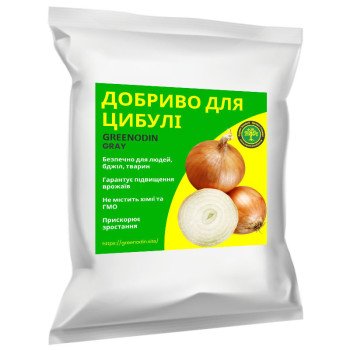
Fertilizers for buld onions
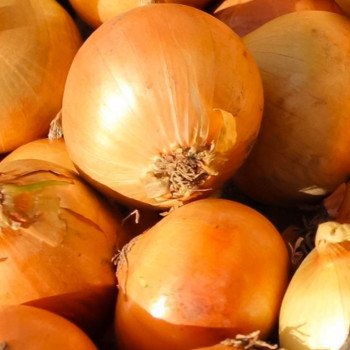
Bulb onion is the most popular vegetable crop worldwide. It is successfully grown in various climatic conditions and on different soil types, both in open fields and in protected cultivation such as greenhouses. The best and most productive bulb onions are grown using organic fertilizers like GREENODIN GRAY, as there is currently a high demand for organic bulb onions. By adhering to GREENODIN's methods of organic cultivation, you can grow healthy and flavorful onions that are free from synthetic chemicals and pesticides.
Growing bulb onions
To achieve high-quality results in growing organic bulb onions, it is important to follow the proper cultivation techniques. When cultivating organic onions, it is necessary to adjust the growing practices according to the climatic conditions and make use of the full potential of the soil by enhancing it with organic fertilizers like GREENODIN GRAY, proper irrigation, and fulfilling other necessary conditions.
Site selection for buld onions
Choosing a location for growing onions is essential. Onions can be grown in any plot, but for organic cultivation, it is necessary to select land that has not been previously treated with chemical fertilizers and pesticides. It is important to avoid growing onions in areas where crops such as brassicas or potatoes have been grown before, as these crops can be potential carriers of diseases harmful to onions.
Preparing the Soil for bulb onions
Before sowing onions, it is recommended to prepare the soil thoroughly. To do this, the soil should be loosened and organic fertilizers like GREENODIN GRAY should be applied at a rate of 25 grams per square meter. Fertilizers can be incorporated using minimal soil cultivation techniques, such as with a cultivator. A sunny location with well-drained soil rich in organic matter, or supplemented with GREENODIN GRAY, will ensure a quality harvest. Prepare the soil by loosening it with garden forks or a tiller and add GREENODIN GRAY to enhance fertility and the quality of organic onions. Bulb onions are biennial crops with many varieties available in the market.
Varieties of Bulb Onions
The following varieties of bulb onions are included in the state register of varieties:
- Elena (150 days)
- Ibis (125 days)
- Ikarus F1 (early maturing, 100-105 days)
- Iroko (115 days)
- Ispanyol (mid-season, 110-115 days)
- Amfora (early maturing)
- Antilopa F1 (115 days)
- Argent (125 days)
- Balada (90 days)
- Banko F1 (mid-season, 130-135 days)
- Baruso (127 days)
- Bereket (mid-late, 115-125 days)
- Bluster F1 (early maturing, 113 days)
- Bolero (150 days)
- Bosko F1 (120-125 days)
- Bravo F1 (mid-season, 155 days), and others.
For organic cultivation, it is recommended to use onion varieties that are suitable for local climatic conditions and have high disease resistance. There are several onion varieties well adapted to the climate of Ukraine and have high resistance to diseases, including:
- Sturon: A popular yellow onion variety known for its high yield and resistance to diseases such as downy mildew and onion smut. It is also well suited for the cooler climate of Ukraine.
- Red Baron: A red onion variety that is also resistant to downy mildew and has a strong flavor. It is well adapted to the cooler climate of Ukraine and can be harvested in late summer.
- Ailsa Craig: A sweet onion variety that is resistant to bolting (premature flowering) and has strong resistance to diseases such as white rot and fusarium wilt. It is well adapted to the cooler climate of Ukraine and can be harvested in late summer.
- Senshyu Yellow: A yellow onion variety that is well suited for the warmer climate of Ukraine and has strong resistance to diseases such as downy mildew and pink root.
- Hyred: A hybrid red onion variety known for its high yield and strong resistance to diseases such as downy mildew and white rot. It is well adapted to the cooler climate of Ukraine and can be harvested in late summer.
Predecessors of buld onion
Onions are sensitive to predecessors, and their highest yield is achieved through crop rotation, as continuous or monoculture cultivation significantly reduces yield. The best predecessors for onion cultivation include winter cereals, legumes, tomatoes, and potatoes, as well as early and mid-season cabbage, cucumbers, zucchini, and other vegetable crops. Onions should not be planted in the same field for 4-5 years. Undesirable predecessors are late-harvested crops. In any case, after predecessors, it is necessary to treat the soil with GREENODIN GRAY to convert plant residues into humus.
Fertilization of onion
Liming of soil is of significant importance for achieving maximum productivity of onion, as onions cannot tolerate highly acidic soil. Due to their underdeveloped root system, onions require an adequate amount of nutrients. For the production of 1 ton of onions, approximately 1.6 kg of nitrogen, 1.2 kg of phosphorus, and 2.4 kg of potassium are utilized. These necessary nutrients can be provided to onion through the action of agronomically beneficial nitrogen-fixing, potassium- and phosphorus-producing bacteria found in organic fertilizers like GREENODIN GRAY.
Conventional organic fertilizers such as manure, compost, and vermicompost, with application rates ranging from 20 to 40 tons per hectare, should be used with caution in the cultivation of organic onions (H3), as they may cause excessive vegetative growth and reduce bulb formation.
Fertilizers for onion (bulb) cultivation organic
The ideal comprehensive solution is the use of organic fertilizers GREENODIN, GRAY. If you are unsure about the acidity of your soil, please refer to the article "Determining Soil Acidity" or conduct a one-time soil laboratory test.
- If your soil is extremely acidic <5.0pH, apply GREENODIN RED. If your soil is highly alkaline >7.5pH, apply GREENODIN BROWN.
- If your soil falls within the pH range of 5.1 - 7.4 (most cases), GREENODIN GRAY will be suitable.
The recommended application rate for both options starts at 25 grams per square meter (per planting hole) or 250 kg per hectare for industrial-scale production. The cumulative nature of the GREENODIN fertilizer allows for reducing the maximum application rate from 25 g/sq.m (250 kg/ha) to 8 g/sq.m (80 kg/ha) for the 6th season or year of application, with a 20% reduction each season, without compromising its effectiveness. This provides a significant economic benefit.
Comprehensive benefits of GREENODIN fertilizer:
- Stimulates plant growth and increases yield quantity and quality.
- Enhances plant adaptation to abiotic and biotic stressors.
- Reduces soil toxicity and suppresses the development of phytopathogenic microorganisms.
- Improves water retention capacity, resulting in water savings of up to 30% during irrigation.
- Renews and enhances soil fertility. Application: Pre-sowing or at the time of planting.
Growing onion bulbs from seeds organic
Growing organic onions from seeds is a great way to obtain healthy and flavorful onions without the use of synthetic pesticides and fertilizers. To enhance plant growth, organic fertilizer GREENODIN GRAY should be applied.
Timing and methods of sowing onion bulbs
Onion seeds should be sown when the soil reaches the stage of physical maturity, even during the so-called "February" and "March" windows. Delaying sowing by 3-5 days can result in sparse seedlings, poor ripening, and reduced yield. Onion bulbs are sensitive to the drying of the topsoil, hence the careful consideration of sowing timing. The recommended seed planting depth is 0.5-3 cm. The seeding rate is 8-10 kg/ha for broadcast sowing and 3-4 kg/ha for precision seeders. The recommended plant density is 800-1300 thousand plants per hectare, while for larger-sized produce, it is 600-800 thousand plants per hectare.
The main sowing methods are wide-row with a row spacing of 45 cm and wide-bed with a row spacing of 60 cm. The sowing scheme depends on the type of seeders used. It can be done with 4 rows, with a row spacing of 25 cm (4 x 25 cm) and a distance of 50 cm between rows, or with a scheme of 6 x 18 + 70 cm (6 rows with a row spacing of 18 cm and a distance of 70 cm between rows). Pre-sowing application involves applying 25 grams of organic fertilizer GREENODIN GRAY per linear meter to each planting hole.
Care for Onion Seedlings
Before and after sowing onion seeds, the plot should be prepared by harrowing. Once the seedlings emerge, light harrowing should be done at right angles to the sowing direction. Inter-row cultivation should also be carried out to control weeds. Soil and selective herbicides can be used to combat weed growth. Additionally, it is important to address pests (such as onion flies, mites, and thrips) and diseases (such as false powdery mildew, alternaria, and rot) when caring for onion seedlings.
Irrigation of Onion Plants
Irrigation is often employed in onion cultivation to achieve maximum productivity. In southern regions, the number of irrigations can range from 2-7, and sometimes even up to 8-12 irrigations. The recommended irrigation rate is approximately 300-500 m3/ha, and in some cases, it may reach up to 5000 m3/ha. The final irrigation should be carried out 20-30 days before harvesting begins. Onion plants require consistent moisture throughout the growing season. It is advisable to irrigate generously once a week or more frequently during dry periods.
Growing Onion Bulbs from Seedlings (Sets)
Organic cultivation of onion bulbs from small sets (0.7-3.0 cm in diameter) is an effective method, particularly in regions with cold climates or for early plant production. About 5-6 days before planting, the sets should be sorted and heated at a temperature of 30-35°C. If the sets have been disinfected to control diseases (such as neck rot and downy mildew), the temperature can be increased to 40-43°C for the last 8 hours of heating. This method aims to achieve early harvest and improve the quality of the produce by reducing the vegetative period.
Seedlings should be planted in technically mature soil to optimize moisture utilization. The timing of planting is crucial, as early planting during a prolonged cold spring can affect bud differentiation, ultimately impacting the shoot formation of the plants. Delaying the planting dates often leads to the drying out of the topsoil layer, negatively affecting root system development and vertical spread, resulting in uneven emergence, delayed maturity, reduced yield, and lower product quality. The optimal planting time for onion seedlings is when the soil temperature reaches 9-10°C or approximately 10-15 days after sowing the seeds.
Planting can be done in rows or wide beds. The distance between sets in a row varies from 4 to 8 cm, depending on the seed size fraction. The recommended seeding rate for row planting is 70-90 kg/ha, while for wide bed planting, it is 50-70 kg/ha.
Seed collection should begin when 5-10% of the foliage has lodged. In years with excessive rainfall, seed collection can start even before the foliage lodging, when the diameter of the sets reaches 1.0-1.5 cm.
Weed Control in Onion Cultivation
There are several options that can be used in combination or separately to control weeds in onion cultivation.
Mulching for Onion Bulbs
Mulching is a great way to suppress weeds around onion plants. You can use organic materials such as straw, leaves, or mowed grass to cover the soil around the onion plants. This helps retain moisture and keep the soil cool, which is beneficial for onions.
Hand Weeding
Hand weeding is another effective method to combat weeds in the onion bed. Take the time to carefully uproot the weeds with their roots before they spread.
Cultivation
Cultivation is a great method to remove weeds when they are still small. Use a sharp hoe to cut the weeds just below the soil surface, being careful not to damage the onion plants.
Companion Plants for Onions
Planting certain companion plants alongside onions can naturally suppress weeds. Some good companion plants for onions include marigolds, basil, and chamomile.
Organic Herbicides for Onions
There are some organic herbicides available that can be used to combat weeds. These products are usually made from natural ingredients such as vinegar or citrus oil. Be sure to read and follow the instructions on the label carefully before using any herbicides.
Remember, weed control is an ongoing process, so it's important to stay vigilant and keep up with weeding throughout the entire growing season.
Harvesting Onion Bulbs
Onions are ready to be harvested when the tops start to turn yellow-brown and fall over. The main sign of full maturity in onion bulbs is the softening of the neck (the portion above the bulb) and the bending of the leaves. Carefully lift the onions from the soil and leave them in a warm, dry place for a few weeks before storing. The mobile silicon in GREENODIN helps make the plant stronger, but its delicacy should be taken into account.
Harvesting is done in sunny weather by forming windrows for drying. In case of rainfall during the harvesting process, drying should be done under shelters. To expedite onion ripening, the root system of the plants is pruned 10-15 days before harvesting. After drying, the remains of leaves and roots are removed from the bulbs, sorted, and stored in well-ventilated storage facilities at a temperature of 5-8°C and relative humidity of 60-70%.
Vegetable Residues of Onion Bulbs
GREENODIN organic fertilizers are highly effective for soil treatment after harvest, as they contain beneficial microorganisms (bacteria and fungi) that act as quality decomposers and suppress pathogenic flora. These microorganisms can break down organic matter and transform it into humus, which is the basis of nutrients for plants.
Furthermore, if the soil contains pathogenic microorganisms such as Phytophthora or other diseases, GREENODIN fertilizers can help reduce their quantity and prevent their spread. Thus, GREENODIN organic fertilizers can help improve the effectiveness of soil treatment and promote healthy plant growth.
Storage of Organic Onions
Proper storage of organic onions is crucial for their long-term preservation and maintenance of quality. Follow these recommendations:
- Keep onions dry as moisture is an enemy that accelerates spoilage. After harvesting, allow the onions to dry in a well-ventilated area for several days until the outer skin becomes papery.
- Store onions in a cool, dry place with good air circulation, such as a cellar or basement, at an ideal temperature of 0-4°C.
- Avoid storing onions together with other produce as onions release a gas called ethylene, which can cause rapid spoilage of other fruits and vegetables. It is best to store onions separately from other items.
- Do not use polyethylene bags for storing onions as onions need to breathe and preventing suffocation and spoilage. Instead, store them in mesh bags or well-ventilated containers.
- Regularly check onions for signs of spoilage, such as soft spots or mold, and promptly remove any spoiled onions to prevent them from affecting others.
By following these guidelines, you can store organic onions grown with the application of GREENODIN, where the active ingredient, mobile silicon, has made the plant's walls stronger and more resilient, for several months and enjoy their excellent taste and health benefits throughout the year.