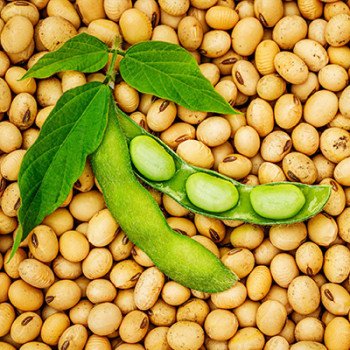
Organic varieties of soybeans with proper certification and non-GMO status include elite varieties such as ANASTASIYA, ANNUSHKA, and ANTOSHKA.
Organic Soybean Cultivation
In this article, we will discuss the cultivation of these recommended regional varieties using the comprehensive organic granulated fertilizers from the brand GREENODIN.
Soil Requirements for Soybeans
Ideal soil conditions for soybean cultivation involve maintaining a pH range of 6.2 to 8, which means from nearly neutral to slightly alkaline. Typically, soybeans are not planted if the pH level is below 5.6. However, by using GREENODIN fertilizers, it is possible to compensate for the required soil acidity level and cultivate soybeans even in acidic soil.
If you are unsure about the acidity level of your soil, you can refer to the article "Determination of soil acidity" or conduct a soil test at least once to determine the pH level.
- If your soil is more acidic: <4.5pH then buy organic fertilizer GREENODIN RED and add at a rate of 250 kg / ha or 25g / sq m
- If your soil is alkaline >8pH, we recommend GREENODIN BROWN rate of 250 kg/ha or 25g/sq.m
- If your soil is acidic and slightly acidic with a pH of 4.5-6.0, we recommend using GREENODIN BLACK at a rate of 250 kg/ha or 25g/sq.m
Soybean requirements for climate
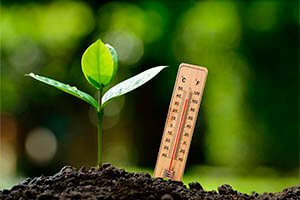
The required sum of active temperatures is 1900-2200 °C.
Soybeans thrive best within a temperature range of 20-30°C. The optimal temperature for their growth and development is around 25°C.
Temperatures of 10°C and below, as well as temperatures of 40°C and above, inhibit soybean growth. High temperatures can also disrupt flowering and cause pod drop. The negative impact of high temperatures is further intensified by water deficit.
Predecessor Crops and Crop Rotation for Soybeans
Suitable predecessor crops for soybeans include grains, corn, sugar beets, potatoes, and perennial grasses. Unsuitable predecessors include other grain legumes, perennial legumes, sunflowers, and brassica crops. The proportion of susceptible crops to sclerotinia (such as sunflowers and rapeseed) in the crop rotation should not exceed 33%.
Soybeans serve as an excellent predecessor for winter wheat and other grain crops, corn, rapeseed, forage crops, and vegetable crops.
Using the GREENODIN organic fertilizers for soybeans and subsequent crops over a period of six years, with decreasing application rates, can have both ecological and economic benefits.
Ecological benefits:
- The use of GREENODIN organic fertilizers promotes soil fertility restoration and enhancement by improving its ecosystem.
- Organic fertilizer application contributes to biodiversity conservation and reduces the reliance on chemical substances in agriculture.
- Applying GREENODIN helps minimize nutrient leaching into soil and water resources, ensuring more efficient nutrient utilization.
Economic benefits:
- GREENODIN can increase soybean yield and improve crop quality, leading to higher profitability.
- The use of organic fertilizers reduces expenses on chemical fertilizers and plant protection measures, positively impacting the farm's economy.
- The long-lasting cumulative effect of GREENODIN allows for reduced fertilizer application rates over time, resulting in cost savings in subsequent years.
Therefore, the application of GREENODIN organic fertilizers for soybeans and subsequent crops can have a positive impact on both the environment and the economy, promoting sustainable and productive agriculture.
The technology of growing soybeans with the use of GREENODIN provides the following benefits:
- Comprehensive solution and simplification of cultivation tasks.
- Long-lasting effect by remaining in the soil and creating an ecosystem, unlike liquid organic fertilizers or mineral fertilizers that can degrade the soil.
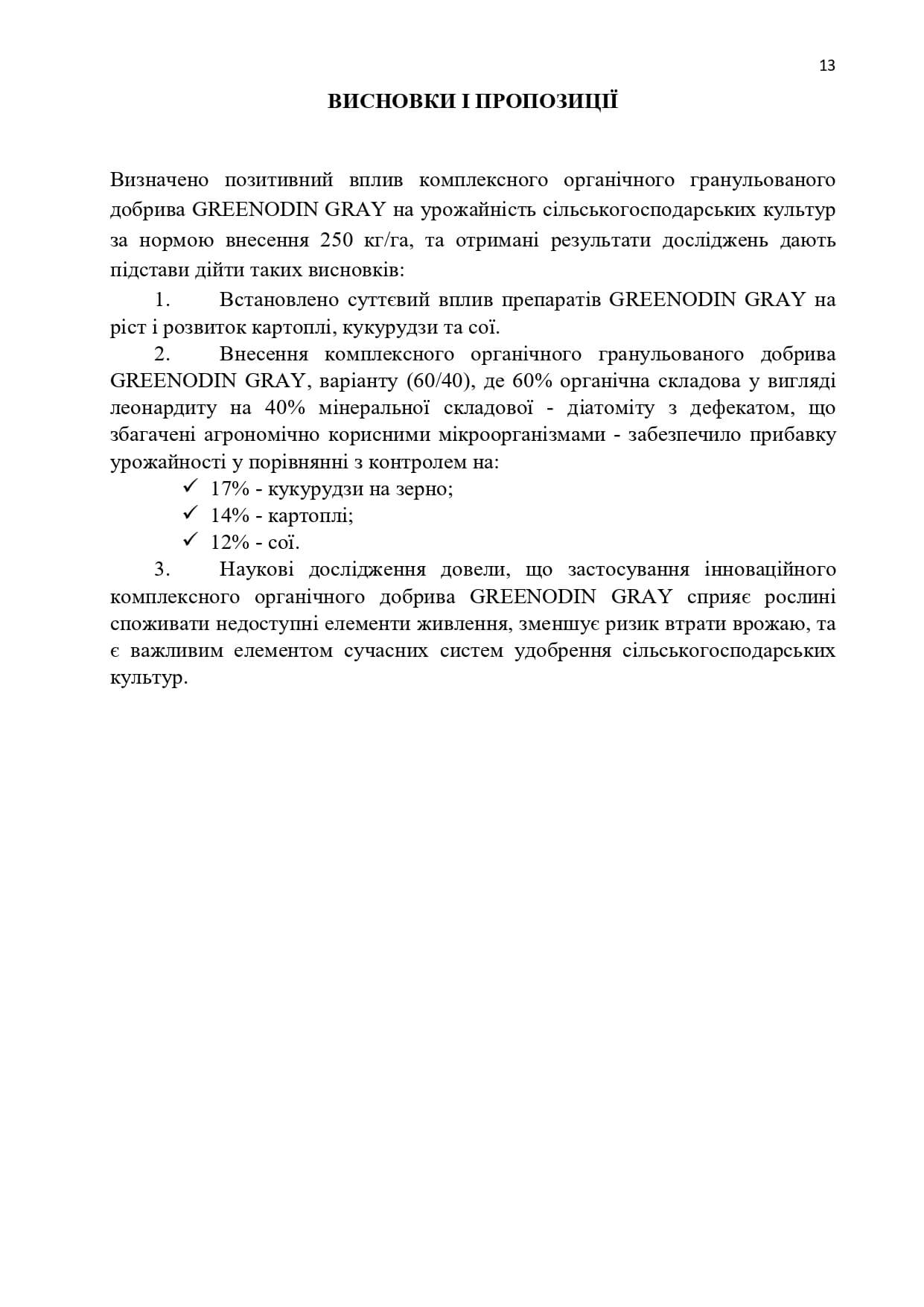
- Accumulation and cumulative effect, allowing for a 20% reduction in the application rate of GREENODIN each year. After 5 years, the application rate will be only 20% of the initial dosage (80 kg).
- Restoration of natural soil fertility and its increase through easily accessible mineral nutrition and natural humus formation.
- Enhanced protection against known soybean diseases.
- Strengthening of the plants and the development of a robust root system.
- Reduction of irrigation by up to 30%.
- Live bacteria present in the fertilizer:
- suppress the development of pathogenic flora;
- provide macro and microelements such as Nitrogen, Phosphorus, Potassium, Calcium, Magnesium, Boron, Zinc, Manganese, Molybdenum, and others, offering sufficient natural nutrition in a readily absorbable form for soybeans.
By implementing the GREENODIN technology, soybean growers can benefit from simplified cultivation practices, improved soil fertility, disease resistance, and reduced water and fertilizer requirements while providing the necessary nutrients for optimal soybean growth.
Nitrogen (N) enhances the growth and development of soybeans. Leguminous plants, including soybeans, meet 50-85% of their nitrogen needs through atmospheric fixation. GREENODIN contains nitrogen-fixing bacteria to fulfill this purpose.
Phosphorus (P) stimulates the development of the soybean's root system and the formation of generative organs, which is crucial for yield. Phosphorus-producing bacteria included in GREENODIN effectively address this task.
Potassium (K) influences soil moisture retention and creates a synergistic effect with amorphous silicon. Soybeans directly absorb 25% of potassium during their entire growth stage until flowering, and the remaining 75% during pod formation (filling).
The combination of potassium and silicon actively impacts yield, increasing seed weight and protein content, promoting nitrogen fixation, and enhancing resistance to diseases and stress factors. The favorable influence of potassium-producing bacteria in GREENODIN further enhances these effects.
Calcium (Ca) improves soil structure, nutrient uptake, and the development of soybean roots. It is an essential component of GREENODIN. Calcium participates in hormonal reactions and, together with silicon, contributes to the formation of soybean cell walls. It is necessary throughout the entire vegetation period, especially during flowering, pod setting, and filling.
Magnesium (Mg) contributes to increased yield, chlorophyll content, and soybean's resistance to diseases. It also facilitates enzymatic processes, fat accumulation, and the formation of essential oils.
Boron (B) stimulates the growth points of young soybean plants, including nitrogen uptake. It also promotes the flowering process, pod setting, and ripening.
Zinc (Zn) activates a range of enzymes, participates in the nitrogen metabolism of plants, and protein formation.
Manganese (Mn) activates enzymes, chlorophyll synthesis, and overall photosynthesis.
Molybdenum (Mo) promotes root growth by activating nodulating bacteria and accelerates vegetation. It accumulates in young plant organs and concentrates in seeds towards the end of the vegetation period, increasing yield and protein content.
In summary, GREENODIN provides a comprehensive range of essential elements such as nitrogen, phosphorus, potassium, calcium, magnesium, boron, zinc, manganese, molybdenum, and more, through the inclusion of beneficial bacteria. These elements play vital roles in the growth, development, yield, and resilience of soybean plants.
The ideal technological plan for growing organic soybeans, in combination with organic products from BTU-Center, may look as follows:
| Solutions | Soil treatment | Pre-sowing seed treatment
| Trifoliate leaf
| Budding - Flowering | Forming beans | Maturation | Stubble |
Base fertilizers
(GREENODIN
80-250 kg/ha,
depends on pH
and
soil composition)
+
Auxiliary fertilizers
(BTU-Center) | GREENODIN
80-250
kg/ha
+
GROUNDFIX
5 l/ha
| BIOINOCULANT-BTU-r
2 l/t
+
HELPROST
1,5 л/т
+
MYCOFRIEND
1,5 l/t
+
LIPOSAM
0,5l/t | HELPROST/Bor
1,5 l/t
+
AZOTOFIT-r
0,5 l/ha
+
BITOXIBACILIN
8 l/ha
+
MYCOHELP
2 l/ha
+
ORGANIC-BALANCE
0,5 l/ha
+
LIPOSAM
0,5l/t
| HELPROST/Soybean
1,5 l/t
+
AKTOVERM FORMULA
5l/ha
+
LEPIDOCID
5l/ha
+
MYCOHELP
2l/ha
+
HUMIFRIEND
0,5 l/ha
+
LIPOSAM
0,5l/ha
| HELPROST/Soybean
1,5 l/t
+
AKTOVERM FORMULA
5l/ha
+
LEPIDOCID
5l/ha
+
MYCOHELP
2l/ha
+
HUMIFRIEND
0,5 l/ha
+
LIPOSAM
0,5l/ha
| LIPOSAM
1,5 l/ha
| GREENODIN 150 kg/ha
+
ECOSTERN
1,5 l/ha
+
SCLEROCID
2 l/ha
|
Soil treatment for soybeans
Soil preparation for soybean cultivation is an important requirement for successful commercial production and favorable subsequent harvesting. The evenness of the plot plays a crucial role in moisture retention, and a level field is beneficial. This is also important during harvest, as uneven areas of the field may result in uncollected pods that grow on the lower part of the stem.
The next important condition is weed control. To combat initial weed growth, prevent subsequent growth, and address residues from previous cereal crops, timely cultivation to a depth of 7 cm with disc harrows is necessary. If the soil is infested with couch grass, a second cultivation should be done using tine harrows to a depth of 12-14 cm. In the case of quackgrass infestation, double discing to a depth of 10 cm should be performed.
Soil Aeration:
Favorable soil aeration is achieved at a density of up to 1.2 g/cm3. Densities above 1.27 g/cm3 negatively impact soybean development, its root system, and are unfavorable for nitrogen-fixing bacteria. To reduce soil density, it is advisable to perform deep plowing to a depth of up to 30 cm and treat the soil with the organic fertilizer GREENODIN. The optimal time for this is at the end of August to early September, preceding the sowing period.
Spring soil cultivation should be completed 35 days prior to soybean sowing. Moisture retention can be achieved through harrowing, and cultivation should be carried out after the "white thread" stage, when weed growth is observed. It is advisable to repeat these measures to control a new wave of weed growth.
1. The most important step in soil preparation for soybeans is the primary tillage to enhance soil fertility, increase its agronomic value, and preserve moisture throughout its layers. During primary tillage, it is recommended to fertilize GREENODIN. This will replenish the soil with the necessary nutrients for assimilation and prepare it for spring soybean sowing. All elements are present in an accessible form for optimal uptake.
2. GREENODIN is also suitable for pre-sowing soil treatment, specifically during moisture retention.
3. The latest application period for GREENODIN fertilizer is during soybean sowing itself.
In the three mentioned scenarios, the application rate of the complex granulated organic fertilizer GREENODIN ranges from 250 kg/ha for low organic content to 80 kg/ha for high organic content.
Inoculation of soybean seeds
Soybean inoculation is an environmentally safe and economically beneficial technology for nitrogen fixation through the treatment of seeds with products containing rhizobial bacteria.
Bioinoculant-BTU-r contains:
- Viable cells of rhizobial bacteria such as Bradyrhizobium japonicum, Rhizobium leguminosarum, and other strains symbiotic to soybeans and other legume crops, with a titer of 2.0×10⁹ CFU/cm3.
- Macro- and micronutrients, biologically active products of bacterial metabolism (vitamins, heteroauxins, gibberellins, etc.).
To treat 1 ton of soybean seeds, 2 liters of Bioinoculant-BTU-r are used, diluted in water ranging from 5 to 10 liters, forming a working solution of 5-10 liters per ton of seeds.
It is also possible to apply the working solution of 20-50 liters per hectare directly into the planting rows during sowing at a rate of 0.2 liters per hectare.
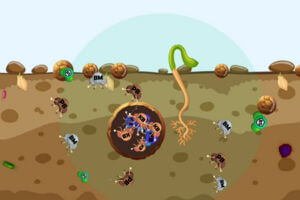
The application of organic fertilizer GREENODIN in the soil creates a favorable environment for the active development of rhizobial bacteria.
Soybean Planting
The optimal temperature range for soybean cultivation is between 20°C and 30°C, with 25°C considered the best for quick and uniform germination. Soybean planting should begin when the soil at the seed burial depth reaches a temperature of 12-14°C. In Ukraine, the soybean planting season typically takes place in the second decade of May.
Choose regionally adapted soybean varieties mentioned earlier in this article. This important consideration helps prevent common soybean diseases and takes into account the specific conditions for soybean cultivation.
The recommended seeding depth is 4 cm for heavy soils and 5 cm for lighter soils. The most common row spacing is 45 or 50 cm, but very early-maturing varieties, which also have weak branching, respond well to narrower row spacing of 25 cm.
It is advisable to adjust the soybean planting density based on the anticipated yield, considering the vegetation period as indicated in the table:
| Growing season, days | Сondition density, thousand pcs/ha | Row spacing, cm |
| 75-85 | 700-750 | 15-25 |
| 85-95 | 600-650
| 25-45 |
| 95-105 | 550-600 | 25-45 |
| 115-125 | 450-500 | 45-70 |
| Больше 125 | 350-450 | 70 |
For early-maturing varieties, scientists recommend achieving a pre-harvest plant density of 700-750 thousand plants/ha. For early varieties, the range is 600-650 thousand plants/ha. For medium-early and medium varieties, the recommended density is 550-600 thousand plants/ha. For medium-late and late varieties, the range is 350-500 thousand plants/ha.
It is necessary to differentiate the seeding rate based on the maturity group of the variety and avoid averaging. Averaging the seeding rates can prevent early varieties from reaching their full potential, while late varieties may struggle with development issues, branching problems, nutrient uptake, and ultimately yield lower harvest results.
For organic soybean planting, the inter-row spacing method with a distance of 30 cm between rows is considered the best. Inter-row plantings effectively control weeds. By reducing the seed rate to 50 thousand seeds for late-maturing varieties instead of 60 thousand seeds, inter-row planting does not negatively impact yield and proves to be a cost-effective approach.
Caring for soybean crops
During germination, soybeans absorb 50% of their weight in moisture, which is essential for achieving uniform emergence. At this stage, soil moisture should be maintained between 50% and 85% of field capacity.
During germination, soybeans absorb 50% of their weight in moisture, which is essential for achieving uniform emergence. At this stage, soil moisture should be maintained between 50% and 85% of field capacity. Water deficit during flowering and grain filling can cause physiological changes in the plants, such as leaf curling and premature leaf drop. This can also lead to flower shedding, pod abortion, and yield loss.
For maximum soybean yield, water requirements throughout the growing season range from 450 to 800 mm, depending on climatic conditions and cultivation practices (irrigated or non-irrigated).
To minimize water stress, it is recommended to use locally adapted soybean varieties suitable for our soil and climatic conditions and to provide timely irrigation when necessary. One effective measure to improve water use efficiency in soybean plants is the application of organic fertilizers like GREENODIN, which contains an amorphous form of silicon that enhances soil water-holding capacity and reduces water consumption for irrigation by 20-40%. The presence of silicon helps the soil retain moisture, protects it from intense sunlight, and allows soybeans to utilize water efficiently.
Under favorable conditions, soybean plants can grow at a rate of 7-8 mm per day, reaching their peak growth during flowering and grain filling. After this period, growth significantly slows down. Besides moisture and climate, the availability of nutrients in the soil is crucial for favorable growth. Organic fertilizers like
GREENODIN, which consist of organic forms of essential elements and beneficial soil bacteria, can effectively meet the nutrient requirements of soybean plants and contribute to their overall health and productivity.
Weeds in soybean crops
The presence of weeds in soybean fields is a direct consequence of primary soil tillage, which varies seasonally. At the end of April to early May, after plowing and other methods of primary tillage, approximately 60% less weed seeds germinate compared to the total amount of weed seeds during the same period. Soil tillage also reduces the presence of monocot weeds, such as common foxtail, as well as perennial weeds like Canada thistle.
Multiple mechanical tillage operations lead to differentiation of the plow layer based on the distribution of weed seeds in the soil. Tillage without inverting the soil concentrates weed seeds more in the upper layer, while plowing with soil inversion redistributes them to the lower layers. As mentioned earlier, a common method of weed control in soybean cultivation is harrowing or rolling, depending on the specific conditions. Wide-row cultivation is effective in reducing weed infestation in soybean crops.
Scientific and field studies have shown that the highest soybean yields, whether under conservation tillage or plowing, are achieved with wide-row planting and two harrowings or rollings, as well as inter-row cultivations.
A single pre-sowing harrowing or rolling for both row and wide-row planting methods is predicted to increase soybean yields. Conducting two harrowings or rollings has contributed to yield improvement in both primary tillage and planting methods.
In summary, the implementation of agronomic practices helps increase soybean productivity by reducing weed infestation in the fields. This approach is logical and aligned with organic farming principles.
Pests of soybean
The information provided on soybean pests covers only a fraction of the total number, which ranges from 110 to 114 species. The harmfulness of the pests listed below negatively impacts soybean yields at levels ranging from 0.5% to 50% and above.
Seedcorn maggot (Delia platura Mg.) targets soybeans from May to June.
From May to July, the tobacco thrips (Thrips tabaci Lind.) attempts to damage soybean crops.
The soybean pod borer (Etiella zinckenella Tr.) can attack weak soybean plants from July to October, particularly during pod formation and development. The risk increases significantly when the crop is located near yellow and white acacia plantations.
From late April to June, soybean crops are at risk of damage from click beetles and wireworm larvae (Elateridae spp.).
From the third decade of May to June, soybean plantings may be attacked by weevils and their larvae (Sitona spp.).
The twospotted spider mite (Tetranichus urticae Koch.), whose larvae can cause damage from June to September, feeds on soybean sap from the underside of leaves, creating webbing on leaves, flowers, and pods.
From June to September, shield bugs (Pentatomidae spp.) can also be harmful to soybean crops.
During seed maturation from June to August, nymphs of tarnished plant bugs (Lygus spp.) can pose a threat.
From mid-May to August, the lucerne bug (Adelphocoris lineolatus Goeze) can damage soybean crops and is known for transmitting viral and other diseases.
Soybean pests such as moths, armyworms, spider mites, lepidopteran caterpillars (Lepidoptera spp.) are highly dangerous from May to September. Infestations occur when late-maturing varieties are used. In such cases, caterpillars feed on vegetative and generative organs.
The soybean pod borer (Eucosma glycinivorella Motsch) can cause significant damage to soybeans as its caterpillars appear en masse at the end of soybean vegetation and can completely destroy soybean pods.
The painted lady butterfly (Vanessa cardui L.) is also a dangerous pest for soybeans. Although it can peacefully feed on weeds, its caterpillars can quickly switch to nearby soybean crops.
As known, pests rarely and unsuccessfully attack healthy and vigorous plants but are primarily attracted to weak and imbalanced plants, including soybeans.
Organic fertilizers
GREENODIN promote the growth of healthy soybeans with increased plant cell wall strength due to the combined action of silicon and calcium, which are present in the fertilizer in an accessible form for the plant. They also enhance resistance to pests.
Effective organic preparations from the BTU-Center can be used to combat the mentioned pests. Natural insecticides such as Bacillus thuringiensis at a dosage of 8 liters per hectare and the adhesive Liposam at a rate of 0.5 liters per hectare are effective against these pests. Additionally, bioinsecticides such as Actoverm Formula and Lepidocide, applied at a rate of 5 liters per hectare, can also prove beneficial.
Diseases of soybeans
Diseases of soybeans, such as rust, powdery mildew, fusarium, and ascochyta, are common. In addition to the preventive measures mentioned above and strengthening soybeans with the use of GREENODIN, it is advisable to use certified organic preparations such as Mikohelp (2 liters per hectare) and Organic-Balance (0.5 liters per hectare) to combat these diseases. These products are effective for preventing and treating the mentioned soybean diseases.
Soybean protection system against diseases, weeds and pests
A comprehensive and detailed system for protecting soybeans from diseases, weeds, and pests is described in the Ideal Technological Chart for Organic Soybean Cultivation, in conjunction with the organic preparations from the BTU-Center, specifically in the "Predecessor Crops and Crop Rotation for Soybeans" section.
Soybean Harvesting
The extraction of the maximum portion of grain with the highest possible quality and purity is the criterion for successful soybean harvesting.
Soybean harvesting begins when the moisture content of the pods is between 13-15%, and the drying process depends on the air temperature and precipitation. Assuming a 5% variation in moisture content within a day, regardless of weather conditions, seeds are typically wetter in the morning due to longer and colder nights. Throughout the day, they gradually dry, aided by natural wind ventilation and moisture evaporation.
Late harvesting of soybeans, with increased moisture content of up to 20%, requires additional costs for artificial drying, increasing its overall cost, which can negatively impact the quality of the final product.
Under favorable conditions, soybeans develop evenly, with leaves falling off during ripening, and the moisture content of the pods decreases to the necessary level for harvesting in a timely manner. However, under unfavorable stress factors such as drought, heat, diseases, or damage, soybeans undergo premature aging (pseudo-ripening), and a significant portion of the leaves remain on the plant along with the "ripened" beans, ready for harvest.
The results of both scenarios significantly affect the quantitative and qualitative characteristics of the soybean crop.
The soybean harvest indicators directly influence the adjustment of the combine during harvesting and should be considered along with the following aspects:
- The combine's speed needs to be adjusted to the airflow and drum rotation speed, including clearances and sieves.
- Sieves are adjusted to match the seed size.
- The combine's speed is typically 25% slower and synchronized with the drum rotation speed.
- To minimize contact with the plant, the combine's threshing drum should be carefully adjusted with a rotation speed of around 500 revolutions per minute.
- The cutting mechanism of the combine should be set at a height of 3-5 cm for the lowest cutting near the ground surface, with a movement speed of no more than 5 km per hour.
By following these steps, you will be able to cultivate and harvest a healthy and productive organic soybean crop while restoring and enhancing soil fertility.
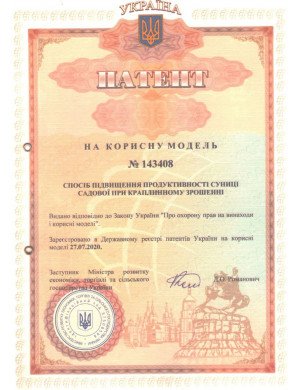
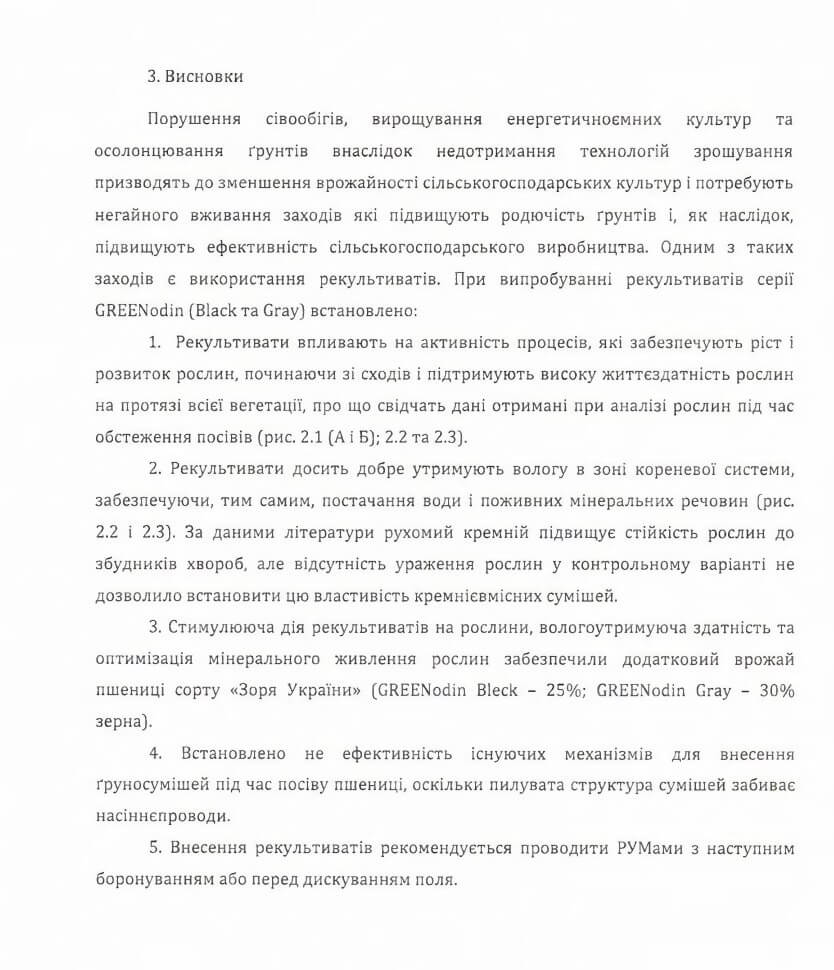
Fertilizers for soybeans GREENODIN are certified Organic Standart and developed according to ecological requirements of the world market of plant growing, and are equivalent to the European standards EC №834/2007 and №889/2008. The developments are protected by patents.