Fertilizers for Thuja
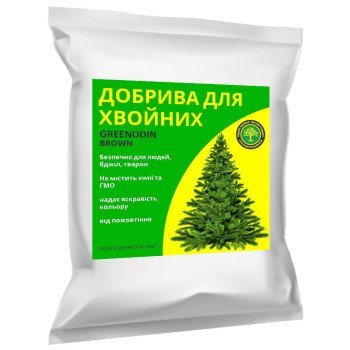
GREENODIN BROWN is the best fertilizer for thuja, as it is a superior complex organomineral solution that contains active silicon, humic and fulvic acids, organic matter, and beneficial microorganisms, all of which contribute to the healthy growth and development of plants.
GREENODIN BROWN is effective in preventing and mitigating stress factors and serves as an efficient fertilizer for thuja in any season and weather conditions.
Therefore, GREENODIN BROWN is an excellent fertilizer for thuja in spring and autumn, providing the plants with essential nutrients, including macro- and micronutrients.
The active silicon present in GREENODIN BROWN fertilizers strengthens the root system of thuja and enhances their resilience to adverse weather conditions and damages. Regular application of GREENODIN BROWN fertilizers promotes healthy and uniform growth of thuja and improves their overall appearance.
The question of "How to fertilize thuja?" or "What to fertilize thuja with in spring?" is addressed by the regular use of the versatile organic fertilizer GREENODIN BROWN. The recommended application rate is 25 grams per square meter or per liter of substrate for container-grown plants. On an industrial scale, it is 250 kilograms per hectare.
Soil for thuja
For growing thuja plants, it is recommended to use a special soil that provides optimal conditions for their growth and development. It is important to prepare soil that has good drainage capacity, retains moisture, has a slightly acidic pH of 5.5, and contains necessary nutrients. GREENODIN BROWN can successfully acidify and enrich the base soil with essential nutrients.
Since waterlogging can lead to root rot, it is necessary to add drainage to the soil in the form of perlite or sand. Alternatively, it is better to use specially prepared artificial soil called "GREENODIN garden soil," enriched with GREENODIN BROWN complex fertilizer at a rate of 25 grams per liter of substrate or by applying it directly around the plant's canopy and watering generously.
This approach is especially convenient and effective when growing thuja in pots or containers, as the mentioned mixture provides good drainage and nutrients. It is important to remember that GREENODIN BROWN improves soil structure, increases its moisture-holding capacity, and enhances nutrient availability for plants. It also promotes the activity of beneficial microorganisms in the soil, which positively impacts its fertility.
Location for Thuja
Thuja, like other coniferous plants, prefers a sunny or semi-shaded location with good air circulation. Thuja thrives best in sunny areas receiving 6-8 hours of sunlight per day, although they can tolerate partial shade, but their growth will be significantly slower.
Wind protection: Thuja is relatively wind-resistant, but strong winds can damage their delicate branches, so it is important to choose a location protected from strong winds. The use of GREENODIN BROWN will greatly strengthen the plant and make it more resistant to wind stress.
It is also important to consider the mature size of Thuja and leave enough space between plants for their unrestricted growth and spread. Generally, it is recommended to leave a spacing of 1 to 3 meters between thuja saplings to allow for sufficient space for their unrestricted growth and development. This will ensure that each plant receives enough light, air, and nutrients from the soil. If you want to create a dense hedge or green wall, it is advised to plant the thuja saplings closer to each other, with a spacing of about 1 meter. Over time, the plants will grow into a dense green barrier.
It's important to consider the specific species of thuja you are growing and the conditions of your site when determining the optimal spacing between the saplings. The specified conditions may vary depending on the specific type of Thuja and the climatic conditions of your region.
Planting Thuja
Proper planting of Thuja will determine their healthy growth and development. By following the soil preparation and site selection recommendations mentioned above, the next step is to prepare or handle the plant, perform the planting/transplanting process for Thuja, and provide proper care to achieve the most beautiful Thuja possible, as determined by nature.
Preparing Thuja for planting/transplanting
If the Thuja seedling is grown in a container, carefully remove it from the container and gently loosen the root ball to stimulate root growth. If the Thuja has bare roots, soak them in water for a few minutes before planting.
Planting/transplanting Thuja
Dig a hole in twice the size of the root system, preferably matching the size of the canopy. Place the Thuja in the center of the hole, ensuring that the top of the root collar is slightly below the soil level. Fill the hole with a mixture of enriched soil containing GREENODIN BROWN, compacting the soil around the roots. Make sure the plant is standing upright and stable.
Water the plant thoroughly after planting/transplanting to provide initial moisture. Maintain soil moisture during the first year after planting, especially during dry periods. GREENODIN BROWN will help retain moisture and alleviate the need for frequent watering due to its moisture-retaining capacity, thus saving 20-30% of water usage for irrigation. Therefore, GREENODIN BROWN, a comprehensive organic revitalizer and soil amendment, is the ideal fertilizer for Thuja during planting.
Caring for Thuja
Consider the important features of caring for thuas
Watering Thuja
Regularly water the plant during the first year, especially during dry periods. Thuja trees require moderate watering to keep the soil moist but not overly saturated. The frequency of watering depends on the environmental conditions, including weather, soil type, and the age of the plant.
Generally, in periods without rainfall or hot weather, water Thuja trees once or twice a week. Water them in a way that the water reaches the root zone of the plant. You can use different watering methods, such as watering at the base or using drip irrigation systems. When watering at the base, try to avoid getting water on the foliage and trunk to prevent the development of fungal diseases. Check the moisture level of the topsoil. If the top layer of soil has dried out, it's a sign that watering is needed. If the soil starts to crack due to drought, water it generously.
Avoid overwatering, and remember that Thuja trees prefer good drainage and cannot tolerate waterlogging. GREENODIN BROWN, like other GREENODIN fertilizers, helps retain moisture and prevents soil cracking due to drying while saving water for irrigation by 20-30%.
Weed control around Thuja
Weed control around Thuja is an essential part of caring for the plant and providing optimal growing conditions. Manual weeding of the plant's vicinity and hand removal of weeds are recommended. Be careful not to damage the Thuja roots while weeding. Regularly mow the grass and weeds around Thuja to prevent their spread, especially before flowering and seed maturation to prevent their reproduction. It's beneficial to shred the mowed grass and use it for mulching.
Mulching Thuja
Apply a layer of mulch about 5-7 cm thick around the base of the plant, leaving a small space around the trunk to prevent stem suffocation. Mulching helps retain moisture, reduces weed competition, protects the roots from temperature fluctuations, and adds organic matter to the soil. It's best to prepare mulch by shredding straw, dry grass (including weeds), small twigs from the Thuja itself, and pine sawdust, adding GREENODIN BROWN for enrichment. Mulching Thuja is recommended in spring or autumn, after the soil has warmed up or cooled down. Periodically check the condition of the mulch and add an additional layer if needed.
Feeding thuja
Regularly feed the thuja with the organic fertilizer GREENODIN BROWN for optimal development and growth. For spring feeding, simply apply 25 grams of this fertilizer around the tree and water it. This fertilizer effectively enriches the soil during thuja planting and enriches the mulch during mulch preparation. The recommended dosage is 25 grams per square meter or per liter of substrate when growing in pots, and on an industrial scale, it is 250 kilograms per hectare.
The cumulative nature of the GREENODIN preparation, regardless of its type, allows reducing the maximum application rate from 250 kilograms per hectare (25 grams per square meter) to 80 kilograms per hectare (8 grams per square meter) for the 6th season of application by reducing it by 20% each year, without any loss in application effectiveness, resulting in significant economic benefits.
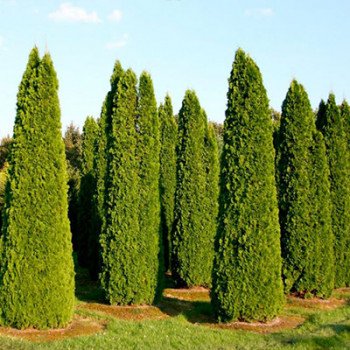
Thuja 'Smaragd' (Thuja occidentalis 'Smaragd') is a popular variety known for its pyramidal shape and rich green foliage. By following the recommendations provided above for thuja care, feeding, planting, and transplanting of Thuja 'Smaragd', you will achieve a beautiful, healthy, and vibrant plant.