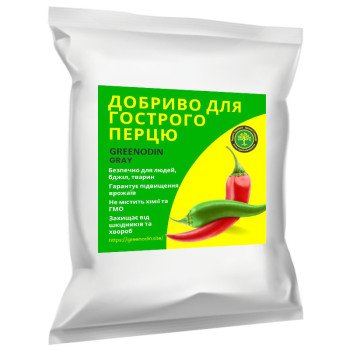
Fertilizer for hot peppers
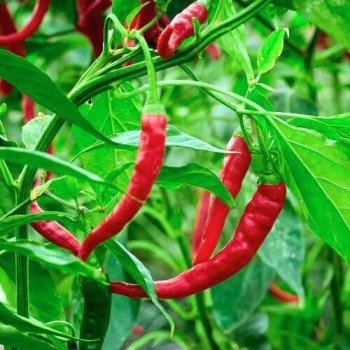
Fertilization plays a crucial role in the growth and development of hot peppers by providing them with essential nutrients. The best modern and effective way to fertilize hot peppers is by using organic fertilizers.
The proven effectiveness for hot peppers is the application of comprehensive organic fertilizers by GREENODIN. The best fertilizers for hot peppers of all time are the comprehensive organic fertilizers with microorganisms, GREENODIN GRAY, suitable for all types of soils. Since this fertilizer consists of natural mineral diatomite and organic component Leonardite, enriched with natural polysilicic acids and agronomically beneficial microorganisms, the action of GREENODIN GRAY is aimed at restoring and improving soil fertility, thereby increasing the volume and quality of the harvest.
The recommended application rate of GREENODIN is 25 grams per square meter or 250 kilograms per hectare on an industrial scale. As the fertilizer has cumulative properties, its seasonal (annual) application is reduced by 20%, reaching an application rate of 8 grams per square meter or 80 kilograms per hectare, leading to significant economic benefits.
By using the comprehensive product GREENODIN GRAY for fertilizing hot peppers, you will definitely achieve:
- Increased soil fertility with improved agronomic and biological indicators.
- Reduction in soil toxicity and suppression of phytopathogenic microorganisms.
- Strengthened plant viability and increased resistance to diseases.
- Stimulation of plant growth and development.
- Reduction in irrigation costs by up to 30%.
- 20% reduction in the application rate of GREENODIN GRAY each season.
- Decreased use of agrochemicals, eventually leading to their complete abandonment.
- Transition to organic farming practices.
- Increased market value of organically grown produce.
Soil for Hot Peppers
The soil plays a crucial role in the successful cultivation of hot peppers as it provides the plant with essential nutrients, drainage, and moisture retention. It is important to enrich the soil with the ideal organic fertilizer for hot peppers GREENODIN GRAY.
Hot peppers prefer a neutral to slightly acidic soil pH level. The ideal pH level for hot peppers is 7.0, and GREENODIN GRAY has a pH of 7.0, making it suitable for use even in acidic soils while safely neutralizing acidity for the peppers.
If the soil pH is too low or too high, you can use the corresponding types of comprehensive organic fertilizers by GREENODIN TM for correction. For example, to increase acidity in acidic soil, you can use GREENODIN RED with a pH of 8.0, and to reduce alkalinity, you can use GREENODIN BROWN with a pH of 5.0.
Additionally, the soil should be loose and have good structure, allowing the plant roots to penetrate and develop. Improving the soil structure can be achieved by adding organic fertilizer GREENODIN. Furthermore, the soil should provide good drainage to avoid water stagnation and over-moistening of the plant roots. This type of drainage can be easily achieved by using diatomite and leonardite, which are included in the composition of GREENODIN GRAY fertilizers. Moreover, the amorphous form of silicon ensures moisture retention of up to 30% without excessive water retention that could lead to root rot.
Considering that hot peppers thrive in containers or raised beds, the best soil that meets all the requirements is GREENODIN garden soil.
Growing Hot Peppers
Growing hot peppers at home or in beds requires the right soil to provide the plant with the necessary nutrients, drainage and moisture retention. It is very important to enrich the soil with an ideal organic fertilizer for hot peppers GREENODIN GRAY.
Hot Pepper Seeds
Select the specific hot pepper seeds you want to grow. You can purchase them from local garden stores or order them online.
To expedite germination, it is recommended to soak the hot pepper seeds in warm water for 1-2 hours before planting. This helps soften the seed coat and stimulate germination. After soaking, rinse the seeds with water. To prevent potential seed-borne diseases, you can immerse the seeds in a weak solution of potassium permanganate or hydrogen peroxide. Then rinse the seeds with water and allow them to dry before planting. Plant the seeds in dedicated pots or containers filled with nutrient-rich soil for plant growth.
You can use GREENODIN garden soil or enhance other soil with GREENODIN GRAY fertilizer at a rate of 25 grams per square meter.
Location for Hot Peppers
Hot peppers require a warm and well-lit location. Ensure that the plant receives 6-8 hours of bright sunlight per day. If you live in a cool climate or have a short summer season, you can grow peppers in protected soil using grow lights.
Watering Hot Peppers
Hot peppers require regular watering to keep the soil moist but not waterlogged. Water the plant when the top layer of soil has dried out, and avoid both under-watering and over-watering as it can harm the plant. Well-draining soil will help prevent waterlogging. GREENODIN GRAY has moderate water retention capabilities, allowing you to save up to 30% of water for irrigation.
Pruning Hot Peppers
Pruning stimulates growth and improves the shape of hot pepper plants. Remove withered leaves or branches that hinder airflow within the plant to ensure good ventilation.
Protection from Pests for Hot Peppers
Peppers can be susceptible to various pests, such as aphids or spider mites. Check the plants for pest infestations and take necessary measures to eliminate them.
Additional protection is provided by mobile silicon, which is present in GREENODIN GRAY fertilizer and consumed by the plant. It penetrates at the cellular level and strengthens the plant's cell walls, making them more resilient to diseases and pests.
Additionally, you can use natural home remedies that are effective against pests, such as a soapy solution with vegetable oil.
Harvesting Hot Peppers
Hot peppers are typically harvested when they reach maturity, and they are considered ripe when they attain their final color, which can vary from green to bright red, orange, or other shades depending on the variety. Size can also be an indicator of ripeness.
Timing of Pepper Harvest
Don't rush to harvest hot peppers as soon as they reach maturity. Wait for a few more days to allow the pepper to fully develop its flavor and heat. Moreover, with the use of GREENODIN GRAY fertilizer for hot peppers, the quality characteristics of the peppers will significantly increase in terms of volume and content.
Method of Pepper Harvest
Use sharp garden scissors or simply snap the pepper off the plant to harvest it. Be careful not to damage the plant or other fruits. Leave a small portion of the stem attached to the pepper to enhance its storage life.
Storing Hot Peppers
After harvesting the peppers, rinse them under cold water to remove any dirt or soil residue. You can then use the peppers immediately for cooking or preserve them for future use.
It is best to store hot peppers in a dark, cool place or in the refrigerator. An alternative option is sun-drying, either individually or in bundles. The components obtained from GREENODIN GRAY will make the hot peppers more resistant to any storage method.
Safety: When handling hot peppers, use gloves to avoid skin irritation from the pungent substance, capsaicin, present in the peppers. Avoid getting the pungent substance in your eyes and face when working with hot peppers. Note that the heat level of peppers can vary depending on the variety and growing conditions. Hot peppers can be very spicy, so exercise caution when handling them to prevent discomfort or burns.