Fertilizers for Violets
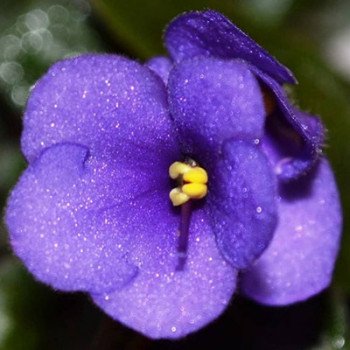
The violet is a genus of plants in the Violet family. It is a beautiful and popular flowering plant that can add color and life to any home or garden. Because of their delicate blooms and lush foliage, violets are a favorite plant of many people. However, in order for violets to thrive, they need proper care and nutrition, especially when it comes to their need for fertilizer.
Violet care. Generally accepted norms
Taking care of violets at home is easier than it might seem at first glance. However, it does require a few important steps. In this article, we will describe the basic steps of violet care
Soil for violets
Violets prefer well-drained soil that is moist and rich in organic matter. A loose and porous slightly acidic soil for violets with an acidic pH (5.5-6.5) provides optimum conditions.
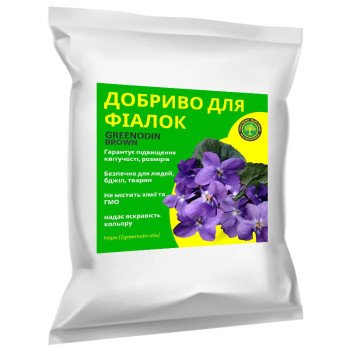
For your beloved plants use ground substrate soil for flowers GARDEN SOIL (pH 6.5) in combination with granulated organic fertilizer for violets GREENODIN BROWN (pH 5.0), added at the rate of 25-30 grams per 1 liter of substrate. You will provide ideal conditions for the natural development of your favorite violets.
How to determine the acidity of soil for violets
There are several ways to conduct a pH test:
pH test kits: This is the easiest and most affordable way. They can be purchased at garden supply stores or online. They usually include instructions for use and give results in a few minutes.
Soil Acidity Meter: This is a more accurate way to measure pH, which uses an electronic device to measure the conductivity of the soil, which is related to pH. This can be more expensive, but gives more accurate results.
It is important to remember that the soil test should be done before planting the plant and periodically check the pH level during cultivation to make sure it stays in the optimal range.
Temperature for violets
The optimum temperature range for violets is between 15°C (60°F) and 21°C (70°F). This temperature range allows the plant to thrive, providing healthy growth and abundant blooms.
The minimum temperature for violets is about 10°C (50°F), but it is important to note that temperatures below this range can stress the plant and negatively affect its growth and flowering. It is best not to expose violets to temperatures below 10°C (50°F) for long periods of time.
The maximum temperature for violets is about 21°C (70°F), but temperatures above this range can lead to leaf wilting and excessive dryness of the plant. To avoid this, it is important to protect violets from heat sources and make sure they are not in a place where the temperature is consistently above 21°C (70°F).
In general, it is important to maintain a stable temperature regime for violets, avoiding drastic changes or fluctuations, so that they remain healthy and bloom abundantly.
Humidity for violets
Violets prefer moderate to high humidity levels, about 40% to 60%. This level of humidity helps keep the plant's leaves hydrated, which is important for healthy growth and flowering.
Low humidity can cause violet leaves to become dry and brittle, and extremely high humidity can increase the risk of fungal diseases. To maintain proper humidity levels for violets, you can use a humidifier, place a tray of water next to the plant, or spray the leaves with water.
It is also important to make sure that the soil of the violet is constantly moist, as dry soil can stress the plant and negatively affect its growth and flowering. Regular watering and feeding with organic fertilizers will help keep the soil moist.
Lighting for violets
Violets prefer bright, indirect light. They do best near a window facing east or north, or near a window with curtains to diffuse light. Direct sunlight can cause violet leaves to burn, so it's important to provide bright, indirect light.
If you don't have a bright window for your violets, you can supplement them with artificial light. A fluorescent bulb or LED grow lamp placed near the plant will provide the necessary light for healthy growth and blooms.
It is also important to monitor the amount of light the violets receive, as too little light can cause the plant to become sluggish and bloom little, and exposure to direct sunlight can cause leaf burn. Regularly adjusting the location of the violets to provide them with the right amount of light will help them develop.
Pruning Violets
Pruning is an important aspect of violet care because it promotes healthy growth, fuller blooms, and maintains the overall appearance of the plants. Whether you have one violet in a small pot or an entire violet collection, regular pruning will help keep your plants looking their best.
Here are some tips for pruning violets:
Timing: Prune your violets after they finish blooming, usually in the spring or summer. This will help ensure the plants have enough time to recover before the next blooming cycle.
Tools: Use sharp, clean scissors or pruning shears to make clean cuts. This will help prevent disease and plant damage.
Pruning: Remove blooms that have faded and yellowed leaves to keep violets looking neat and stimulate new growth.
Rejuvenating pruning: For old or sluggish violets, do a rejuvenating pruning treatment by cutting the stems to about half their length. This will promote new growth and fuller blooms.
Proper technique: When pruning, make cuts just above the node, the place where the leaves emerge from the stem. This will encourage new growth and help avoid bare stems.
Avoid excessive pruning: Although pruning is very important, it is also important to avoid over-cutting your violets. Excessive pruning can weaken the plant and reduce flowering.
By following these simple tips, you can keep your violets healthy, vibrant and beautiful. Regular pruning will help keep your plants in great condition, and with a little attention, your violets will thrive for years to come.
Propagating Violets
Propagating violets is a great way to grow new plants and expand your collection of these beautiful and low-maintenance flowers. There are the following ways to propagate violets:
Dividing: One of the easiest methods of propagating violets is dividing. This method involves carefully dividing the roots of an existing violet plant into several parts, each with its own root system, and planting each part in a separate pot. To divide a violet plant, carefully remove it from the pot and carefully divide the roots into several parts, making sure that each part has its own set of roots. Plant each part in a separate pot filled with GREENODIN GARDEN SOIL in combination with granulated GREENODIN BROWN complex organic fertilizer (added at the rate of 25-30 g per 1 liter of potting soil). Water well.
Stem cuttings: Another way to propagate violets is with stem cuttings. This method involves taking a stem cuttings from an existing plant and rooting it in water or potting mix (GREENODIN GARDEN SOIL soil substrate). To take a stem cuttings, select a healthy stem with few leaves and cut it to a length of 4 to 6 inches. Place the cut end in the GREENODIN GARDEN SOIL soil substrate. Cover the leaf cuttings with a plastic bag to create a mini greenhouse, and keep them in good light. Keep the soil moist, and in a few weeks new roots will begin to form and new shoots will appear.
Replanting a violet

- developed in accordance with the environmental requirements of the global crop production market and are equivalent to the European standards of the EU No. 834/2007; No. 889/2008
- allow you to create ideal conditions for growing plants by enriching the minimum standards and transferring soil of increased fertility
Unique properties of organic fertilizer for Violet TM GREENODIN


Why customers consider GREENODIN the best fertilizer for Violets
Based on feedback from our customers, we have compiled a list of reasons why customers rated GREENODIN as the best fertilizer for Violets.Protective bacteria Bacillus Subtilis

Thermal protection of plants

Biochemical plant protection

Root formation

Growth acceleration
Saturated bright color

Drought tolerance