Fertilizers for raspberries
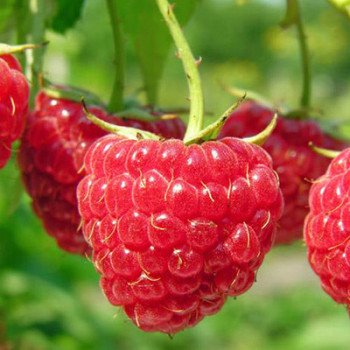
Fertilizers for raspberries GREENODIN BROWN is an excellent choice for fertilizing raspberries as it improves soil structure, enriches it with nutrients, and promotes the development of beneficial microorganisms. This fertilizer is also effective for everbearing raspberries, which have the ability to flower and bear fruit both in spring and autumn. GREENODIN BROWN ensures healthy growth and a high yield.
Growing raspberries
How to grow raspberries correctly or how to grow raspberries without problems? It's a relatively simple question with a broad answer and considerations! The key is that raspberry cultivation can be an engaging process and yield good results when certain conditions are met.
Site for raspberries
Raspberries prefer sunny locations with good air circulation. Choose a spot where the plant will receive 6-8 hours of sunlight per day. Avoid overly shaded areas or places where water stagnates.
Soil for raspberries
The soil should be loose, fertile, and well-drained. Improve soil quality by applying the base doses of GREENODIN BROWN before or during planting. The ideal soil pH level for raspberries is pH 6.0. You can easily determine the soil pH level using test kits available at garden centers. If the soil pH is too low (acidic), use GREENODIN GRAY to raise it. If you have heavy clay soil or water retention issues, improve drainage by creating raised beds or adding sand or perlite to the soil. However, do this after applying the appropriate GREENODIN fertilizer, as they also enhance the soil's drainage properties.
Planting raspberries
Raspberry planting is typically done in spring or autumn. The spacing between plants and rows depends on the raspberry variety. If you practice periodic pruning, especially with everbearing varieties, the spacing between plants can be slightly closer, around 45-60 cm within the row and 1.5-2 meters between rows. This helps create denser rows and increases overall yield.
Traditionally, when growing raspberries as bushes, it is recommended to plant the plants at a distance of approximately 60-90 cm between plants within the row and 1.5-2 meters between rows. This allows the plants to have sufficient space for growth and development.
Palm method: In the palm method of raspberry cultivation, where the canes are attached to supports, it is recommended to plant the plants at a distance of approximately 45-60 cm between plants within the row and 2-2.5 meters between rows. This method allows for compact rows and facilitates maintenance and harvest.
Planting raspberry seedlings:
- Soak the roots of the raspberry seedling in water for 1-2 hours before planting to moisten them.
- Place the raspberry seedling in the hole, ensuring that the roots are evenly spread and the bud tip (if present) is facing upwards.
- Fill the hole with a soil mixture enriched with organic fertilizer such as GREENODIN BROWN, compacting it firmly around the raspberry roots.
Make sure that the planting level is the same as before, meaning the roots should be covered with soil, and the bud should not be too deep or too high.
Raspberry Care
It is important to provide comprehensive care for raspberries to ensure a successful harvest.
Raspberry irrigation
Raspberry requires regular watering, especially during dry periods. Keep the soil moist but avoid overwatering to prevent root rot. The frequency of watering may vary depending on the climatic conditions.
Raspberry pruning
Proper pruning helps stimulate raspberry growth and yield. Remove old and damaged shoots and perform bush shaping according to the recommendations for your raspberry variety.
Weed control in raspberry
Weed control in raspberry is important to prevent weed competition for nutrients, water, and light. Weed-free raspberry growth ensures its healthy development. For this purpose, regular manual weed removal around raspberry plants is an effective control method. Try to remove weeds completely with their roots to prevent their regrowth. Be careful not to damage the raspberry's root system when removing weeds.
To prevent weed growth, it is necessary to perform Raspberry Mulching, which involves covering the soil with a layer of mulch to prevent weed growth. Mulch suppresses weed access to light, suppresses their growth, and helps retain moisture in the soil. Use natural mulch such as straw, cut grass, wood chips, or other organic materials, and distribute them around raspberry plants. Adding fertilizers for raspberries GREENODIN BROWN to the mulch will provide simultaneous raspberry fertilization.
An alternative method of weed control is Field Covers. You can plant fast-growing plants or low-growing cereal crops around raspberry bushes to create field covers. This will help suppress weed growth as the fast-growing plants will compete with them for resources. Make sure the selected plants do not compete with the raspberry and do not cause problems in the future.
Fertilizing raspberry
Fertilizing raspberry plays an important role in its healthy growth, development, and productivity.
Spring fertilizing of raspberry, as well as summer fertilizing
Spring fertilizing of raspberry, as well as summer fertilizing are important for ensuring its healthy growth, development, and productivity.
Autumn fertilizing of raspberry
At the same time, autumn fertilizing of raspberry plays an important role in preparing the plants for the winter period and stimulates their healthy growth and development in the following season. In our case, the versatility of GREENODIN BROWN, which provides raspberry with macro- and micronutrients from its surrounding soil due to the composition of the fertilizer and the action of agronomically beneficial microorganisms, can be easily applied as a base dose by applying the product and watering abundantly with water.